

Monk fruit extract and stevia are the two dominant botanical high-intensity sweeteners. Both are zero-calorie, zero-glycemic, plant-derived, and US GRAS — and they are not interchangeable. The comparison that matters is not between two plants. It is between two specifications, and two very different cost and sensory trade-offs.
What Each Ingredient Actually Is
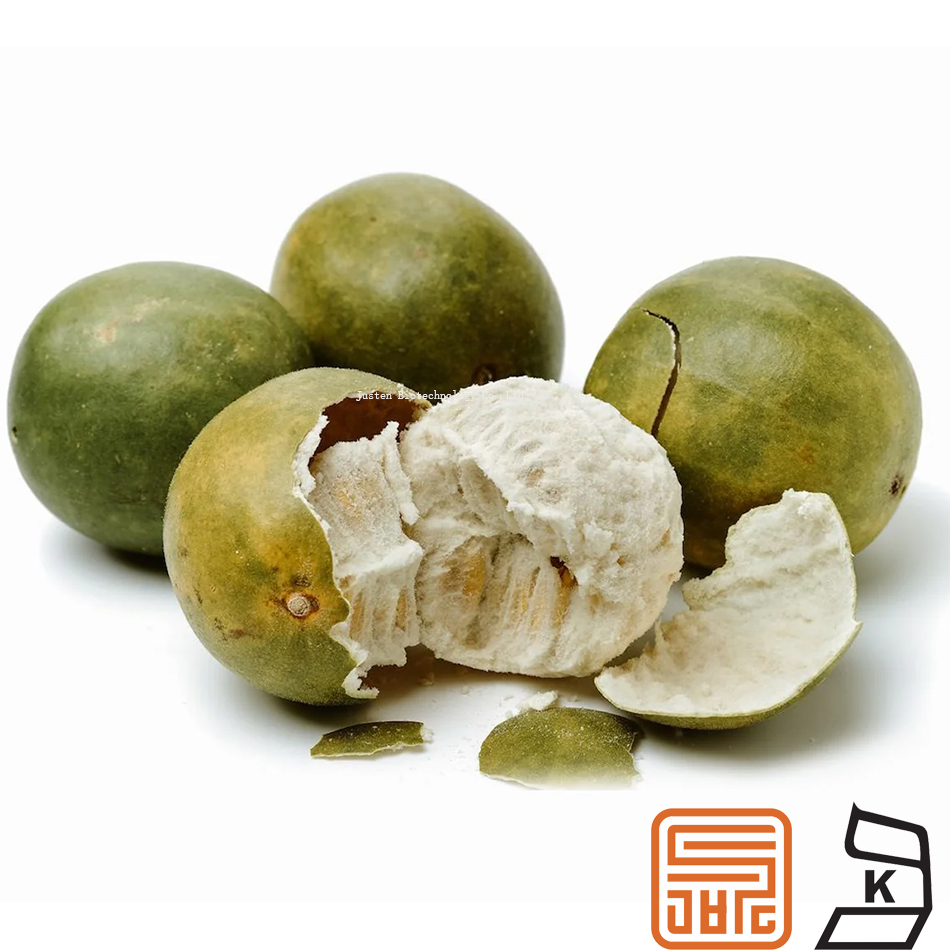
Monk fruit extract comes from the fruit of Siraitia grosvenorii, grown almost entirely in China's Guangxi region. Its sweetening compounds are mogrosides, with Mogroside V as the dominant and most potent. Commercial grades run from 20–25% Mogroside V (commodity tier) to 50% (high-purity) and ≥80% (isolate).
Stevia comes from the leaves of Stevia rebaudiana, grown across multiple regions. Its sweetening compounds are steviol glycosides, primarily Rebaudioside A (Reb A), with Reb M and Reb D as cleaner-tasting but pricier fractions. Grades are specified by Reb A content — 80%, 95%, or 99%.
The structural point to remember: monk fruit has one benchmark compound. Stevia has several. That single difference shapes everything downstream — how you specify it, how it tastes, what it costs.
Specification Structure
| Attribute | Monk Fruit Extract | Stevia |
|---|---|---|
| Benchmark compound | Mogroside V | Rebaudioside A (or Reb M/D) |
| Sweetness (vs sucrose) | 150–300× | 200–350× |
| Common grades | 20–25%, 50%, ≥80% Mogroside V | 80%, 95%, 99% Reb A |
| Assay method | HPLC | HPLC |
The grade determines use rate, taste, and cost far more than the plant it comes from. A 20% Mogroside V Monk Fruit Extract and a 50% one are effectively different ingredients. For monk fruit, the spec is clean — more Mogroside V means cleaner taste. For stevia, switching from Reb A to Reb M changes taste, solubility, and price all at once.
Sensory Profile: Where the Decision Is Actually Made
Stevia's off-note is a bitter, licorice-like aftertaste that lingers past the sweetness peak. The cause is receptor chemistry — steviol glycosides activate TAS2R bitter taste receptors, a mechanism well documented in sensory science. It is worst in low-purity Reb A and at high use rates. Reb M and Reb D reduce it, but at higher cost and lower water solubility.
Mogroside V does not hit the bitter receptors the same way. The result is a clean, rounded sweetness with rapid onset and a short finish — closer to sucrose, with no licorice note and no persistent tail.
I've watched formulators switch sweeteners mid-development more times than I can count. It is almost always the aftertaste. In a clear beverage there is nowhere to hide it; in a chocolate or a yogurt, fat and protein do the masking for you.
Stevia is cheaper. Monk fruit is cleaner. Everything else is a footnote.
I've watched formulators switch sweeteners mid-development more times than I can count. It is almost always the aftertaste. In a clear beverage there is nowhere to hide it; in a chocolate or a yogurt, fat and protein do the masking for you.
Stevia is cheaper. Monk fruit is cleaner. Everything else is a footnote.
Technical Performance
| Parameter | Stevia | Monk Fruit Extract |
|---|---|---|
| Heat stability | Up to 200°C | Up to 180°C |
| Water solubility | ~30 g/L at 20°C | ~50 g/L at 20°C |
| pH tolerance | 3.0–10.0 | 2.5–9.0 |
| Aftertaste | Licorice/bitter (Reb A) | Minimal; sucrose-like |
The figures are the industry's commonly cited reference values. Stevia tolerates more heat — better for baking and high-temperature pasteurization. Monk fruit dissolves better and tolerates more extreme acidity — better for cold beverages, kombucha, and citrus-heavy RTD products. Neither replaces sugar one-for-one in baked goods; both typically pair with a bulk sweetener like erythritol or allulose there.
Cost-in-Use: The Metric That Matters
Price per kilogram is the wrong metric. Price per unit of sweetness is the right one.
On a per-kg basis, monk fruit extract is the expensive one — bulk pricing runs roughly US80–200/kg, US25–60/kg for stevia, a gap that holds across the industry. The reasons are structural: monk fruit grows in a single Chinese region, and reaching high Mogroside V purity takes more processing steps.
But cost-in-use flips when you account for aftertaste. I've had buyers tell me stevia is the cheaper option, then watch their masking-agent budget quietly erase the savings. If stevia's bitterness forces citric acid, flavor modifiers, or a second sweetener into the formula, the "cheap" ingredient stops being cheap.
For mass-market soft drinks and energy drinks, stevia's lower bulk cost usually wins. For premium, keto, and clean-label lines where taste is the brand, monk fruit justifies the premium.
On a per-kg basis, monk fruit extract is the expensive one — bulk pricing runs roughly US80–200/kg, US25–60/kg for stevia, a gap that holds across the industry. The reasons are structural: monk fruit grows in a single Chinese region, and reaching high Mogroside V purity takes more processing steps.
But cost-in-use flips when you account for aftertaste. I've had buyers tell me stevia is the cheaper option, then watch their masking-agent budget quietly erase the savings. If stevia's bitterness forces citric acid, flavor modifiers, or a second sweetener into the formula, the "cheap" ingredient stops being cheap.
For mass-market soft drinks and energy drinks, stevia's lower bulk cost usually wins. For premium, keto, and clean-label lines where taste is the brand, monk fruit justifies the premium.
Regulatory Status
Both are broadly cleared, on different timelines. Stevia was approved in the EU in 2011 under Regulation (EU) No 1131/2011, with JECFA setting an ADI of 4 mg/kg body weight. Monk fruit received US FDA GRAS status in 2010 and later EU Novel Food authorization. For multi-market formulators, both work in the US and EU — but the specific grade must match each jurisdiction's approved profile.
Application Fit: Where Each Wins
| Application | Better Fit |
|---|---|
| Transparent RTD, citrus, kombucha | Monk fruit |
| Premium / keto / clean-label | Monk fruit |
| High-heat baking | Stevia |
| Mass-market soft drinks | Stevia |
| Dairy, confectionery | Stevia (or blend) |
The pattern: monk fruit wins in clean, aqueous, acidic, or premium applications; stevia wins in high-heat, high-volume, or matrix-covered ones.
Sourcing Considerations
Both ingredients sell across a wide grade range, and the grade — not the plant — determines what you receive. Three checks apply:
- Specify by the benchmark compound. "Monk fruit extract" without a Mogroside V percentage is ambiguous.
- Confirm the assay method. HPLC with the individual compound quantified is the standard.
- Watch for fillers. Some blends pad the active with erythritol or maltodextrin; the COA should state active content explicitly.
JustenBio supplies Monk Fruit Extract standardized to Mogroside V — 20%, 30%, and 50% powder grades, all HPLC-assayed and extracted from Siraitia grosvenorii fruit with ethanol and water. Our Standardized Extract products ship with full COA documentation. For beverage lines pairing a natural sweetener with a functional botanical, Green Tea Extract is a common co-ingredient.
Conclusion
Monk fruit extract and stevia are both legitimate, broadly approved, zero-calorie sweeteners. Monk fruit wins on flavor clarity, solubility, and pH tolerance, and costs more. Stevia wins on heat stability and cost-in-use, and carries an aftertaste you may need to mask. The formulators who get this right are the ones comparing specifications, not plants.