
Genistein — the most-studied isoflavone in the phytoestrogen family — anchors a growing number of women's health and bone-support supplements. But sourcing it well comes down to knowing exactly what "genistein 98%" means, how it differs from the daidzein-rich soy isoflavones many buyers already use, and how to confirm purity on a COA.
This guide covers the specifications that matter, how genistein is positioned in the market, and a checklist for vetting a Sophora Japonica Extract supplier.
1. Genistein vs Daidzein: Two Phytoestrogens, Different Roles
Genistein and daidzein are the two best-known isoflavones — plant compounds that share a similar structure and both act as phytoestrogens. Most buyers first meet them together, because soy isoflavones are a mix of the two (plus smaller amounts of glycitein).
That familiarity creates a common sourcing mistake: assuming every isoflavone ingredient is a blend. A Sophora Japonica Bud Extract standardized to genistein 98% is a different material — it delivers a single, high-purity isoflavone rather than a daidzein-containing mixture. If your formula or label is built around genistein specifically, this distinction is the difference between a clean single-compound spec and a blend that quietly shifts your label math.
Here is the practical takeaway for sourcing:
- Soy isoflavones = genistein + daidzein (+ glycitein) — a total-isoflavone blend.
- Sophora japonica genistein = single-compound genistein, available up to 98% purity.
- If you need genistein on the label, buy genistein — not a blend that happens to contain some.
2. Key Specifications: Genistein 98% and Sophora Japonica Flavonoids
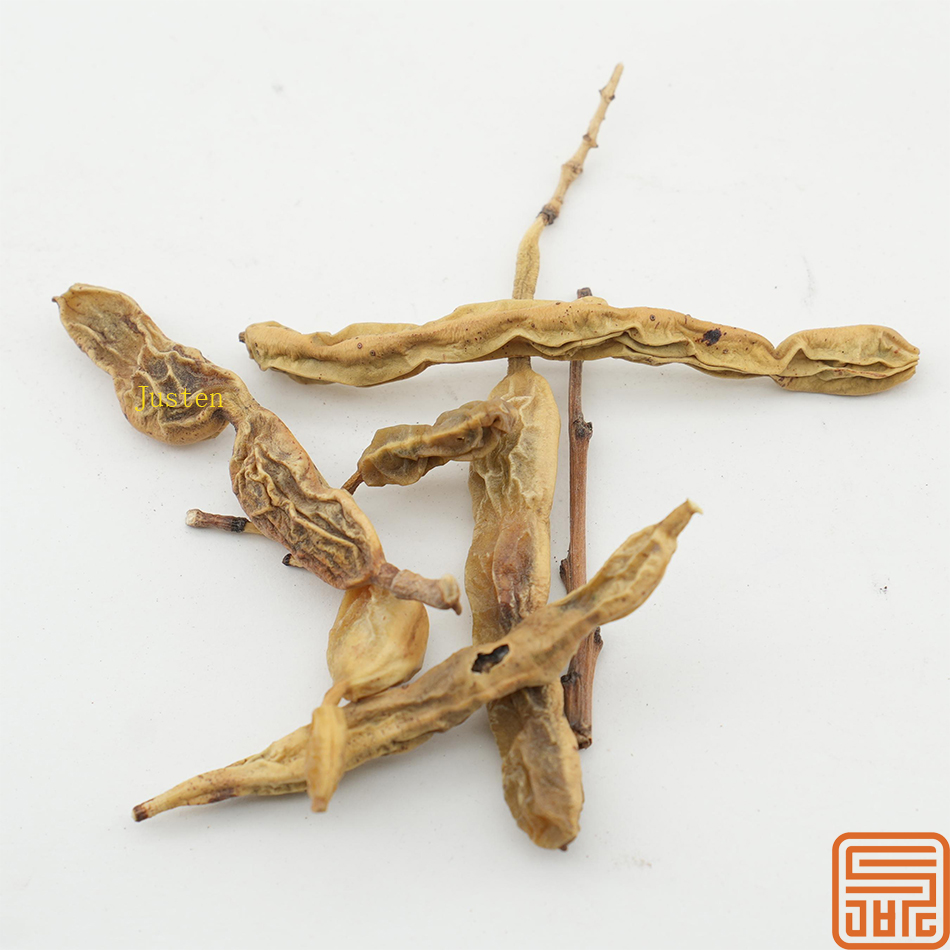
Genistein is available in high-purity grades, most commonly 98%. Taking Justen's Natural Sophora Japonica Flower Extract Genistein 98% (SJE058) as a reference, here is what a complete spec looks like:
| Parameter | Specification | Method |
|---|---|---|
| Genistein content | ≥98.0% | HPLC |
| Identification | Positive | TLC |
| Appearance | Off-white powder | Visual |
| Particle size | ≥95% through 80 mesh | USP<786> |
| CAS / formula / MW | 446-72-0 · C₁₅H₁₀O₅ · 270.24 | — |
| Loss on drying / ash | ≤1.0% / ≤1.0% | GB 5009.3 / 5009.4 |
The same botanical — Sophora japonica L. — also yields a wider flavonoid family beyond genistein, which is useful if you source multiple ingredients from one manufacturer:
- Rutin NF11 95% — a flavonoid for vascular and capillary support.
- Sophora Japonica Extract Quercetin 95% — a well-known antioxidant and anti-inflammatory flavonoid.
- Kaempferol 50% and Sophoricoside 20%/50%/98% — additional sophora flavonoids for specialized formulas.
Reading the COA beyond the assay
- Heavy metals — total ≤10 PPM, lead ≤3 PPM, arsenic ≤1 PPM, cadmium ≤1 PPM, mercury ≤0.1 PPM (GB 5009 series).
- Microbiological limits — total plate count ≤1000 cfu/g, yeast & mold ≤100 cfu/g, with E. coli, Salmonella, and S. aureus negative (GB 4789 series).
- Non-GMO and non-irradiated status, with no carriers or excipients.
- Source — extracted from Sophora japonica L. fruit using ethanol and water.
3. Applications: Where Genistein Fits in Your Portfolio
Genistein's position as the flagship isoflavone makes it a natural fit for several supplement categories:
- Women's health and menopause support. As a phytoestrogen, genistein is the compound most buyers reach for when formulating isoflavone-based women's health products.
- Bone health. Research has focused on isoflavones for supporting bone density in aging populations — a core reason genistein appears in bone-support blends.
- Antioxidant support. As a polyphenol, genistein contributes antioxidant activity, fitting cleanly into antioxidant and healthy-aging formulas.
Compliance note: genistein is a dietary supplement ingredient. Keep finished-product claims within your market's rules — "supports bone health" and "phytoestrogen support" are safer than disease-treatment language.
4. How to Vet a Sophora Japonica Extract Supplier
Run shortlisted suppliers through this checklist:
- Purity spec is explicit. Confirm "genistein 98%" is a single-compound figure by HPLC, not a total-isoflavone blend.
- HPLC + TLC. Request both the quantitative assay (HPLC) and identification (TLC).
- Batch-level COA. Covering assay, heavy metals, microbiology, and physical parameters.
- GMP manufacturing. Ask about GMP-standard production and quality documentation.
- Traceability. Confirm botanical source (Sophora japonica L.), plant part, and origin.
- Free sample. A reliable supplier will provide a sample for your own assay.
- Consistency across flavonoids. If you buy rutin or quercetin alongside genistein, confirm each is standardized independently.
5. Justen's Sophora Japonica Extract Range
Justen Biotechnology supplies the full sophora flavonoid spectrum from Sophora japonica L., with a 1 kg MOQ and monthly capacity up to 3 tons on core grades, across three production lines (extraction, solvent extraction, purification–drying–packaging):
| Product | Key spec | Internal link |
|---|---|---|
| Natural Sophora Japonica Extract Genistein 98% | SJE058 | view product |
| High Purity Sophora Japonica Extract 98% Genistein | SJE007 | view product |
| Sophora Japonica Extract Genistein | SJE103 | view product |
| Sophora Japonica Extract Rutin NF11 95% | SJE032 / SJE057 | view product |
| Sophora Japonica Extract Quercetin 95% | SJE033 / SJE056 | view product |
| Sophora Japonica Extract Kaempferol 50% | SJE034 | view product |
| Sophora Japonica Extract Sophoricoside 98% | SJE097 | view product |
Need a genistein 98% sample and COA?
Tell us your target purity, annual volume, and market — we'll send a free sample, batch COA, and a normalized quote.
Request a Free Sample & COA →